




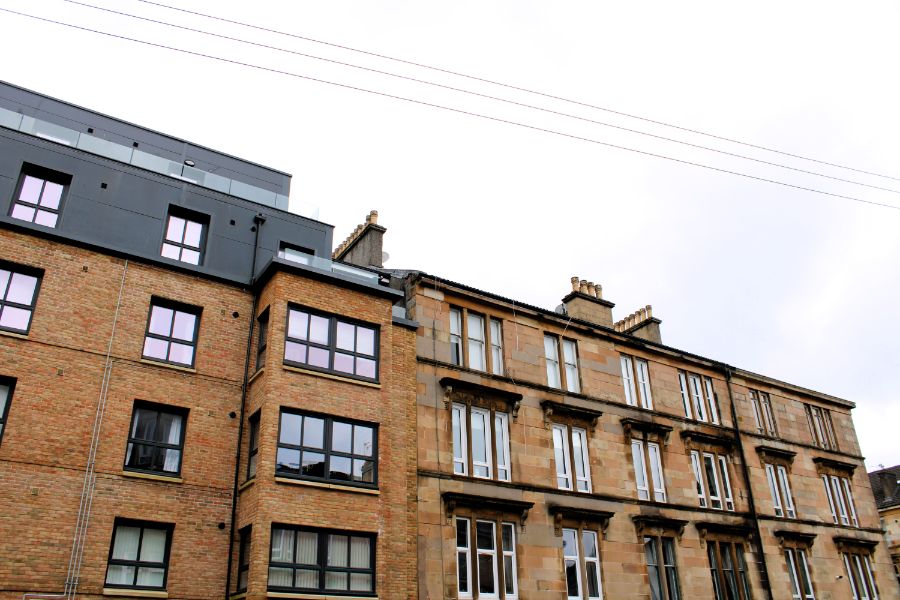


A guide to setting up an owners’ association
An owners’ association is a formal arrangement between the owners, complete with a constitution, and agreed rules and procedures. Having one in your building can make a big difference when…
If you live in any kind of building containing flats, you have rights and responsibilities, along with your co-owners, to maintain and manage common repairs in your building.
An owners’ association is a formal arrangement between the owners, complete with a constitution, and agreed rules and procedures. Having one in your building can make a big difference when…
Organising common repairs can be challenging. Download our decisions-tree guide to help you navigate the process and ensure you're following proper procedures. Download the decisions-tree guide Learn more about organising…
We recommend that you get a professional survey carried out on your building every five years. In between, take a proper look at the building yourself using this guide. If…
Download our Duty to Maintain template letter to inform your co-owner(s) of their legal duty to maintain the support and shelter of your building and inform them of necessary repairs.…
An example of what you might write on the Simple Procedure claim form. You can
Adapt this as appropriate for your own building. Download a copy of this sample constitution Owners' Association Sample Constitution Model Constitution of the XXXXXXX Association 1. Name The name of…
Obtaining formal consent from your co-owners is essential at key stages during the repairs process. It's also considered best practice to regularly update everyone on the progress of the repairs.…
A maintenance account serves as a dedicated account for funds earmarked for future repairs and maintenance. The account holds the float contributed by each owner, as well as any advance…
Use this downloadable checklist to note the key rules that apply to your building. If there is nothing on a particular topic in your titles, then you must use what…
Many areas have local advice centres where you can go to talk through difficulties you're facing. Money advice Finding a money advice centre near you Free legal advice Free legal…
Acoustic engineers are trained in the study of sound and how it moves through different materials. Acoustic engineers can advise on how to deal with noise problems in your building…
Architects do not only design new buildings - many also have considerable experience in managing tenement repairs. They will also carry out building condition surveys and prepare maintenance plans. How…
Employed by the client in a construction project, the job of the clerk of works is to keep an eye on the building works. Employed by the client in a…
Often used on larger jobs, a quantity surveyor will normally be brought in by your architect or surveyor. On jobs of the size or larger than a full roof replacement, a…
A building surveyor will help you specify, tender for, and supervise repairs. They will also carry out building condition surveys and prepare maintenance plans. There are several types of surveyor,…
Sometimes, the need for repair is obvious, such as when you have a damp patch. However, planned repairs can save you money - a stitch in time saves nine. Even…
Trade associations will register members and make, at the least, paper checks to ensure that the member is legitimate, solvent, and has appropriate qualifications. They all have an online service…
If you don't know the condition of your building, you don't know how to prioritise repairs. A survey can give an objective assessment of the issues for you and your…
A structural engineer can advise on the significance of cracks or subsidence and any remedial measures you need to take. You should enlist the help of a structural engineer if…
The approach you take to dealing with antisocial behaviour will depend on the type of problems you are experiencing and your own confidence in dealing with people. You may feel more…
The police can take action (and seek a conviction) on any antisocial behaviour which is a criminal offence. Antisocial behaviour which can be considered criminal includes: vandalism attacking another person…
Even if you live in a house rather than a flat, you may still have common responsibilities that apply to the housing estate around you. Problems may often occur on:…
What or where is the problem? Stonework Worn/decaying/flaking stone Staining on stones Cracked stones Cracked stones Rusting steel pins crack stones Crack in previous stone repair Bulging walls Bulging walls…
Some simple rules can help you to have a good meeting and keep owners coming back to finish business. You could circulate your meeting rules in advance. Take turns to…
A list of the legal terms you may find in your title deeds or may need if you use Simple Procedures. Arranged alphabetically. Where a term is in italics, it…
When you need to speak to a neighbour, prepare yourself in advance. Be prepared first of all, get your facts in order, so you know what options are available to both…
Emergency repairs are defined as those that: really cannot wait for a scheme decision to be made are required to prevent damage to your building are in the interests of…
These orders are used when a flat is in such a poor state of repair that it becomes unfit for human habitation. When used These orders can only be used…
Your local council has legal powers to take action against noise and health hazards. Contact the Environmental Health, Antisocial Behaviour, or Community Safety Teams. The types of action that the council can…
Check your contract with the builder to see what scope you have for complaints. Use their complaints procedure first, and then escalate to their trade association complaints procedure (if they…
If you have common repairs underway, even if you have only got as far as getting agreement, you can make sure that owners who sell their flats don't disrupt the…
If you have a dispute with a co-owner that you have been unable to resolve through meetings and discussions, you can use mediation or go to the Sheriff Court to…
There are a number of defined occasions when you must allow access to your flat to allow for communal repairs and associated works. In terms of the Tenements (Scotland) Act…
Keeping the common areas clean is part of your maintenance obligations. These obligations are set out in law and in your title deeds. Like common repairs, you are almost always…
You need to check your title deeds to see if they define what 'repairs' and 'improvements' are for your building. Title deeds are often very vague on these issues, especially those…
Some parts of the building are shared between some, but not all, owners. Typically, these are parts of the building that only some owners use. The owners that don't have…
Common repairs refers to the parts of the building for which all owners as a group are responsible for maintaining. Note: This is not strictly the language used with the…
Repairs for which a single owner is responsible are called 'individual repairs'. These are generally the inside of the flat, doors to individual flats, and windows. Repairs for which a…
If you are considering legal action, it is worth talking to a solicitor first. You may be able to get a free first meeting or legal aid - ask your…
Good property management is a good selling point. Purchasers want to know they are buying into a property with a good future, rather than a pile of problems. The first…
Many flats are self-factored. To get the best experience from this, you need to be well-organised and prepared to call on professional help when required. Many buildings self-factor as the owners…
Land ownership is public information, as is the name of landlords. Landlords You can search for the details of a private landlord through the Scottish Assessors website. However, this information is…
Repairs are inevitable and need to be tackled quickly before more damage is caused leading to bigger bills, possibly affecting the value of your property. Grants for repairs are seldom…
Maintaining a common bank account to hold advance payments for repairs is recommended. This account could be managed by your owners' association or property manager. Creating a Building Reserve Fund…
If your factor uses an in-house trades firm, you may wonder how the factor ensures value for money. There are of course benefits to using an in-house firm. It avoids…
Insurance premiums can make up a large part of your factoring fee, so you'll want to check you are getting the best deal. By law, every flat owner must carry…
The Property Factors (Scotland) Act 2011 established the requirement for a detailed Code of Conduct which property managers must adhere to. This is a summary of the Code of Conduct.…
Your council has a number of powers it can use to enforce repairs. However, not every council has the resources to do so. This can stop a council from taking…
Your council can use a 'repayment charge' to recover repair costs. It is registered on the title deeds and means that an owner will likely have to pay off the…
Designed primarily to help tenants, this order may also be useful for getting landlords to deal with common repairs. It can only be served by your local council. When used…
Council officers and police need proof of antisocial behaviour. They may be able to provide this themselves, but you can also help, and its simple and safe to do. You…
You need to have a written agreement with any trade firm before you finally accept a quote and work starts on the ground. For smaller jobs, under £1,000 or so,…
There is a lot that can be done to make it easier to cope with work on-site and get the best from your chosen firm. If you have employed an…
You have a legal responsibility to consider health and safety matters on every building contract. If you employ a professional to manage building work, they will take over all these…
It's good practice to have a list of owners and their contact details, including email addresses and phone numbers, if possible. When making decisions, you should take all reasonable steps…
As always, check your title deeds to see what applies to your building. If there is nothing, or it is unworkable, then act as below. The default rules in the…
These are the rules that apply in most tenements, but you must check your own tenement rules in case there are differences. While most title deeds are straightforward in this…
There is legal protection for owners who do not agree with majority decisions. The circumstances are relatively limited. If the decision has been made using the default rules within the…
What to do when a flat is owned by a couple or a partnership. As always, check your title deeds on this matter. If there is nothing there, then the default…
An example of what you might write on the Simple Procedure claim form. You can
If you feel that establishing a property management agreement could improve the overall running of your block of flats or tenement and create a more harmonious living environment for residents,…
If you are suffering from noise caused by the everyday living activities of your neighbours, there are a number of things you can do to improve sound insulation. Noise caused…
Councils have the power to pay Missing Shares where a minority of owners do not pay their share of common repairs. When can the council pay Missing Shares? Your council…
This notice is used to protect the building fabric and is for work which is necessary to bring or keep a house up to a reasonable state of repair. When…
Maintenance orders are often used as a follow-up to other notices to avoid future repair problems. A Maintenance Order requires owners to produce a plan to maintain their property to…
A problem with common repairs can become an official public health 'nuisance'. An official 'nuisance' is something that affects people and must be 'abated'. The health of the building cannot…
You may occasionally come across these other powers being used by the council to enforce common repairs. Disrepair/defective building notice This order is designed to protect the building fabric and…
Your council, and any housing association or private landlord, should take measures against tenants who breach their tenancy conditions, which includes antisocial behaviour. The landlord should speak to their tenant,…
Antisocial behaviour is behaving in a way that is causing or is likely to result in alarm or distress. It can include a sequence of activities that has these results…
You need to get together a long list of potential tradespeople and then check out the firms to reach your shortlist. Ask your shortlisted trade firms to give you a…
If you need an educated guess about what a repair will cost, ask for an estimate. If you want a considered, fixed price, ask for a quote. Putting together a…
One of the biggest changes to tenement and flat living in the past decade has been the increase in the number of flats which are rented out rather than owner-occupied.…
Gardens can be a very useful asset for your building and some good plans for improving buildings often come out of owners' discussions over a back garden BBQ. But who…
Building Reserve Funds (also known as Sinking Funds) are a type of fund set up to pay for repairs. Key points about Building Reserve Funds all owners pay in on…
Repairs are inevitable and need to be tackled quickly before more damage is caused. Ideally, you will have saved a cash reserve for such occasions. Otherwise, you will need to…
If you are not able to change your property titles, you and your fellow co-owners can agree to temporarily divide shares differently to what is stated in the titles. The…
Owners may feel aggrieved if one owner, their visitors, or tradespeople they have employed, have caused damage to the common property. Ideally, the owner concerned should pay for the damage,…
Before making any changes to your flat, whether that's 'improvements' or changes in use, you need to check your title deeds and check if you need to get any consents…
While flats are good value for money and often close to many services, you need to check carefully what you are buying into. When buying a flat, you are buying…
Are you acting as a factor if you are a private landlord who arranges common repairs in blocks where you own a property? The Property Factors (Scotland) Act 2011 s2 Guidance from…
If you have followed correct procedures and your co-owners still won't pay their share for common or mutual repairs, you can use the new Simple Procedure claims action at the…
If a Simple Procedure claim is made against you and you do nothing about it, the court will almost automatically grant an order against you. If you have a court…
If your property is Below Tolerable Standard (BTS), your house is classed as being unfit for human habitation. You may be able to get additional help to bring the property…
Once you have a court judgement, if the debtor does not immediately pay up, you will need to enforce payment of the debt. Enforcing the decision At this stage, you…
An owners' association is a formal arrangement between the owners of your building. It arranges regular meetings to discuss how your building will be managed and maintained. By 'formal' we…
Your responsibility in a flatted building doesn't just extend to paying for common repairs. If you are responsible for maintaining a part of a building you are required to: keep…
In some cases, the loft may be individually owned. However, repairs to the loft may be a common responsibility. Always refer to your title deeds to check who owns the…
In the summer of 2017, the Scottish Government carried out a review of the Property Factors (Scotland) Act 2011. This is a summary of what they found. Since the Property…
Whether repairs to dormer windows are individual or common depends on when they were built. If dormer windows were built at the same time as the rest of the building,…
Community mediation is designed to help with neighbour problems. Both parties must be willing to take part. An independent mediator will listen to the views of both you and your…
The Tenements (Scotland) Act 2004 imposed on every owner a duty to maintain the parts of the tenement that provide support and shelter. This would apply to leaking roofs, rot…
You are obliged by law to have adequate insurance for the tenement and common parts. This is to cover your share of the costs of major and expensive damage to…
What happens when a factoring business shuts down and owners are transferred to another firm? Are your funds protected if the factor goes out of business? We've never known a…
Some rules apply to all flatted buildings, regardless of what the titles say. The rules that apply to every flat are: a requirement to have building insurance the Duty to Maintain…
Owners of shops and commercial premises in tenements and blocks of flats need to follow the same rules as other types of owners. Share of repairs Shops must pay their…
Your titles may set out the share to be paid by each owner in a number of ways. The most common ways that costs are shared are by: equal shares…
Property factors, also known as property managers, are employed by you and your co-owners to manage the common parts of your building. Property factors are governed by the Property Factors…
You need formal agreement from your co-owners at specific points in commissioning a repair. But, it is also good practice to keep everyone posted of progress throughout the repair process.…
Opinions on what is noisy can vary, so the Scottish Government has set out guidelines for councils to follow. You can check noise levels yourself with a smartphone app, but…
Problems may occur where flats have been subdivided, merged, or enlarged into the loft or basement after the title deeds were drawn up. Ideally, title deeds for all flats should…
You should start the process of resolving complaints informally and work through the increasingly formal steps if you need. Start informally The first thing to do if you have a…
Meetings are the best means of communicating with owners as everyone gets a chance to ask questions and share their point of view. You don't necessarily need a meeting to…
Mortgage lenders now require that those buying flats with cladding to provide a satisfactory EWS1 certificate. An EWS1 certificate can only be provided by a qualified fire engineer and initially…
Owners are responsible for paying for repairs from the time a properly agreed scheme decision to go ahead with work is reached (or in the case of work carried out…
Repairing or retrofitting tenement buildings can be an expensive and complicated process. Many of Scotland’s tenement owners want to carry out repairs, or retrofit their building to make it more energy-efficient, but…
Private Sector Housing, Planning, Environmental Health, and Building Control functions are generally spread across a number of service departments which vary from one council to another. Please note: the Private…
Text by Iain Cairns and Emma Miller, University of Strathclyde What are property factors? The Property Factors (Scotland) Act 2011 defines property factors as follows: Property factors, also known as…
Titles are proof of ownership of a property or building and contain the various rules that apply to the property or building. Titles have been gradually changing since the 1980s…
Use this downloadable checklist to note the key rules that apply to your building. If there is nothing on a particular topic in your titles, then you must use what…
If your titles are holding back repairs, they are relatively easy to change, particularly if all owners agree. If you cannot get all owners' agreement, then you will need to…
Many titles have gaps or are inconsistent. Typical problems encountered with titles are: something missing (in terms of common maintenance) shares not adding up to 100% share of costs unworkable…
You should have been given a copy of you Title Sheet (previously known as a Land Certificate) or titles when you purchased your flat. If you have purchased your property…
Titles are often tricky to work through, so it pays to have a checklist and some idea of how your titles are set out. This information should have been given…
There are a number of options for enforcing repairs that you can take yourself, some with legal help. There are other solutions that can only be implemented by your local…
The first short talk of the day was delivered by architect Ingvar Maxwell, who explored the history of stone in Scottish buildings from the prehistoric age until the 20th century. He explained how…
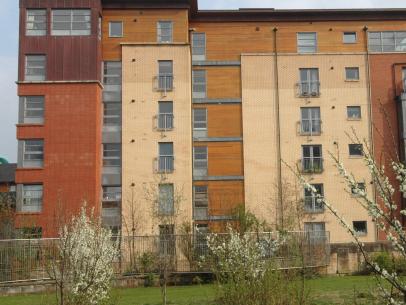
Mortgage lenders now require that those buying flats with cladding to provide…
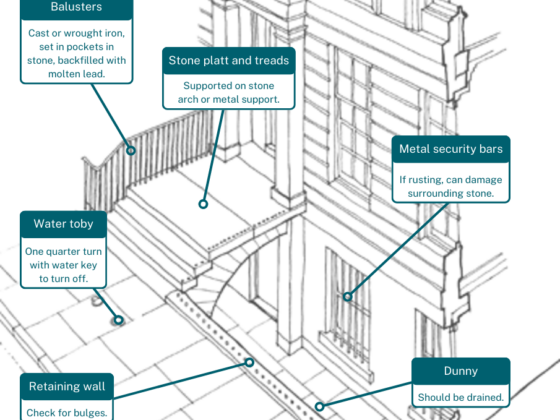
Your tenement may have a basement, sometimes used for living accommodation or…
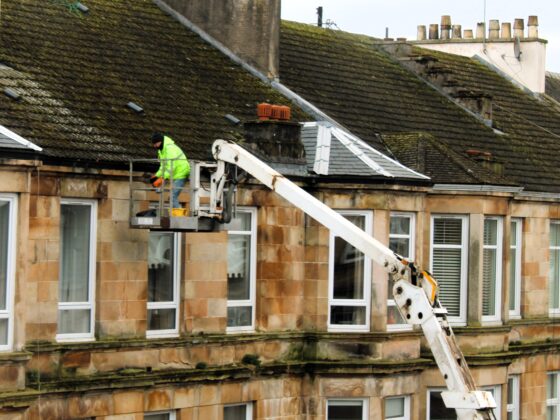
Insulation, draught-proofing and improved glazing can save money, improve comfort and reduce…

Recent research suggests that traditional solid stone or brick walls provide better…
Your support helps us continue providing free information and advice to tenement owners and housing professionals. Please give what you can by clicking the PayPal button below.

When you visit our website, it may store information through your browser from specific services, usually in the form of cookies. Here you can change your Privacy preferences. It is worth noting that blocking some types of cookies may impact your experience on our website and the services we are able to offer. When you have made your selection please save preference and select I agree.