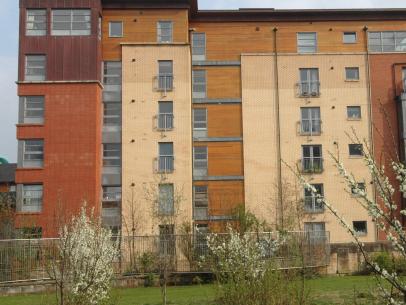

Gardens can be a very useful asset for your building and some good plans for improving buildings often come out of owners’ discussions over a back garden BBQ. But who pays for garden maintenance?
The question of who pays for garden maintenance can be a tricky one as the title to the land under the garden may belong to one owner, even if in practice all owners are allowed to use it.
As always, check what your particular titles say. If your titles are silent on this issue, the default rules in the Tenements (Scotland) Act 2004 provides that the individual owner(s) of the bottom flat nearest to and adjacent to the outdoor area will own the outdoor area and can choose how they want to maintain their parts. These rules do not apply to any common access path/stairs etc.
For example, it is common for tenement titles to refer to the common back court (or back green) without mentioning any front garden(s). In this case, it is likely that the rear garden will be common scheme property, but the front garden will be owned solely by the bottom floor flat immediately adjacent to each section of the front garden(s).
Sometimes, particularly in cottage flats or four-in-a-block flats, each flat has its own particular garden area set out and each is responsible for maintaining their allocated part.
In contrast, sometimes the titles may expressly make the garden common property and impose on all owners the duty to maintain it. Here, the garden becomes scheme property under the Tenements (Scotland) Act 2004.
If owners have separated off part of a communal garden for their own use, this should have been done with all flat owners’ consent and that owner will have taken responsibility for maintenance of that part of the garden. They will still need to pay a share of maintenance of other common parts, unless agreement has been made otherwise. Conveyancing is needed to change the title of the garden on a permanent basis.
Taking care of the garden is a type of maintenance and where the garden is scheme property decisions should be made using proper procedures. If there is a dispute or confusion about responsibility, speak to a solicitor.