
You need to check your title deeds to see if they define what ‘repairs’ and ‘improvements’ are for your building. Title deeds are often very vague on these issues, especially those for older tenements.
If there is nothing in your common title deeds that clarifies the issue, you should follow the default rules in the Tenements (Scotland) Act 2004.
The default rules within the Tenements Act says ‘maintenance’ includes:
- repairs and replacement
- cleaning
- painting
- other routine works
- gardening
- the day-to-day running of a tenement
- the reinstatement of a part (but not most) of the tenement building
- installation of insulation
Note: whilst factually an ‘improvement’, the default rules within the Tenements Act allows a majority to instruct the installation of a controlled entry security system in the same way that maintenance can be carried out.
‘Maintenance’ excludes:
- demolition
- alteration or improvement unless “reasonably incidental to the maintenance”
An improvement is typically described as adding something new to a building that wasn’t there before. Whereas, maintenance primarily involves repairing the existing parts of a building that need fixing. However, when something new is added or upgraded that is essential to a repair, this is still considered maintenance.
What counts as “reasonably incidental to maintenance” is not specified in the law. It covers situations where owners repair part of the building and improve the specification for good maintenance reasons. This may be necessary when something is upgraded because the spare parts to allow a repair to be carried out are no longer available or it is uneconomical to carry out a like for like replacement.
So, if owners are advised that a close front door cannot be reasonably repaired, then replacing it with one of a more secure specification would be considered maintenance, rather than an improvement, unless the new door had some significantly upgraded features that go beyond a simple replacement.
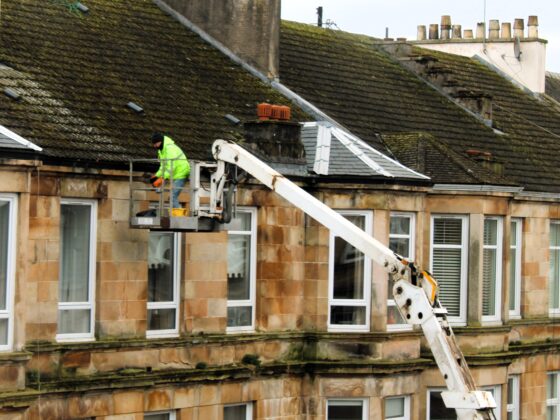
The same would apply if the gutters needed replaced and owners decided to use an undercloak and deeper gutters as this website suggests.
Owners are seldom responsible for paying for improvements (i.e. not maintenance) they did not agree to. Owners who do not agree to improvements can often block improvements going ahead or seek to be excluded from the cost. They may be persuaded to allow the improvements to go ahead if they do not have to pay.
Legal reference
as amended by