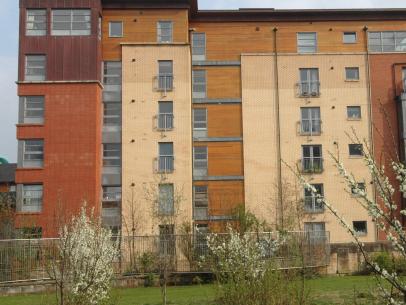

You are obliged by law to have adequate insurance for the tenement and common parts. This is to cover your share of the costs of major and expensive damage to your building. You need to insure your building for a reinstatement value that could be more than the sale value. Many tenement and apartment blocks carry a common block insurance policy, which all owners pay for jointly.
Why do we need insurance?
If you do not have insurance, you will need to pay the cost of any damage to your property from your own funds, even if it is not your fault.
If there is a fire, then all flat owners in a tenement block will be required to share the cost of rebuilding. You cannot rebuild just part of a block of flats, so if one owner is uninsured, or underinsured, there are major problems for every owner. This is why the Tenements (Scotland) Act 2004 makes it an obligation for all owners to have insurance for their property. This duty applies regardless of what your titles say.
The consequences of even one owner not having insurance or having inadequate insurance can be catastrophic. The uninsured owner could lose their home. The value of their flat following a fire could be less than they paid for it, and they would still have obligations to pay for the fire damage to the common property. Other owners could be left living in temporary accommodation and paying rent, as well as a mortgage, for months, if not years, if the uninsured owner is unable to repair or rebuild their flat (and provide the necessary support to the upper levels of the tenement).
Common insurance – legal obligations
Decisions about common insurance are normally majority decisions (but check your title deeds).
It is a legal obligation under the Tenements Act for all flat owners to carry insurance for their flat and their interest in the common parts (the only exception to this would be where it proves impossible to insure your building). This can either be done by:
- each owner taking out an individual policy
- the owners agreeing to instruct a common (or block) insurance policy (which is one policy covering all flats and common parts)
If the default rules in the Tenements Act apply (i.e. the titles are silent on insurance provisions), the owners can make a scheme decision to instruct a common (or block) insurance policy to fulfil this duty.
If you have a mortgage, its terms will most likely require you to carry adequate buildings insurance.
If you don’t have common or block insurance, you can be required, on 14 days notice, to show your co-owners evidence that you have sufficient common buildings insurance.
What if someone doesn’t have insurance?
If owners can’t show you proof that they have adequate insurance cover, you can take legal action to ask the Sheriff to order your co-owner to take out insurance.
Legal reference
More information
What types of insurance are there?
You can choose between two different ways of insuring your building:
- block or common insurance – this generally refers to building insurance which covers every owner in a tenement or block of flats or estate; it sometimes also refers to a top-up policy to your own individual buildings insurance
- individual building insurance – this must also cover the common areas of your building
These are not the same as contents insurance – which covers your own personal possessions and furniture – or landlords insurance. Ideally, you will have both building and contents insurance.
How much cover do you need?
Check your title deeds to see what they say about your common insurance obligations. However, it is recommended to have insurance which is sufficient to cover the cost of rebuilding your flat, your interest in the common parts, professional costs, and a small buffer.
How to value your building for insurance?
You can get a rough idea of rebuilding costs by using the Building Cost Information Service. This is a very basic service which does not cover any properties built before 1946 or any listed property. However, treat it as a call for action if the reinstatement value given there is substantially different from what you are currently insured for.
Ideally, you should have a Building Reinstatement Valuation to ascertain the costs of completely rebuilding your property. These valuations must be carried out by a RICS qualified surveyor and are recommended every three to five years as the costs of building materials and necessary expertise change. The cost of this survey could be around £50 per owner, but this will depend on the size and number of owners in your building.
This valuation can be updated annually using the BCIS Rebuilding Cost Index (the cost index for the two years up until January 2024 showed that rebuilding costs had increased by 21%, more than the rate of inflation). This is an unusually high increase, but it shows the importance of ensuring an up-to-date valuation is obtained on a regular basis.
What if we are under or over-insured?
If you need to partially repair or rebuild, and you are under-insured, your claim will be averaged. This means that you will only get a fraction of the insurance claim.
If you have insured your building for £1m, but your reinstatement value should have been £1.5m, you will only get paid two-thirds of your claim. There is no benefit in being over-insured, you can still only claim for what you’ve actually paid after exclusions. For the small increase in premium to cover the full reinstatement value, it is better to overestimate the costs than to underestimate them.
Should we go for a series of individual policies or one ‘block’ policy?
Firstly, check your title deeds. Your title deeds may require you to have a block policy. You also need to check with your lender – the majority will allow you to opt for a good block policy.
If you’ve truly got a choice, then check that you can indeed get a block policy. You may need to go through a broker.
After that, you will want to compare costs and benefits.
Individual insurance policies may offer a lower headline premium through introductory offers, however, you need to check policy conditions carefully:
- is everything covered?
- are there any unusual common parts that you might need to tell the insurer/broker about?
- you need to do your homework carefully each time you renew or change a policy to check all the small print for exclusions
- it’s known for some insurance policies to exclude cover for plumbing leaks, unless you carry both contents and building insurance – that kind of insurance may not meet your needs in an emergency
- if you have got an introductory offer, you will need to shop round every year to keep getting low rates and you will need to check the policy carefully every time for exclusions etc.
- the cost of insurance may be cheaper for individuals who have had no claims, but could be considerably higher if there has been a previous claim in the block
- you also need to make sure you are insuring your property for the right value
- your insurance premium is based on the rebuilding cost of your property
- in some areas, and especially with stone buildings, the rebuilding cost can be much more than the purchase cost of a flat
- if you are underinsured, then you will only get a proportion of any claim
- if you know that other owners don’t have adequate insurance cover, you are obliged to inform your own insurer as this is a ‘material consideration’ and could affect the premium charged and any claims, if not mentioned
With a block policy, in the event of a claim, you may be able to make savings by being able to make a single claim for all owners for an insurable event and only pay one excess. If you have a factor that arranges the block insurance, they may deal with the administration side of claims on your behalf.
If you have individual policies, you will all have to pay an excess each time you claim for a common property problem.
Note, if you are obliged to have a block policy, you may be able to opt for a lower premium in exchange for an agreement that every owner claims individually and each pays the agreed excess.
A distinct advantage of having a block policy is that you don’t need to check every year that your co-owners are carrying enough private insurance. Under the Tenements Act, each year, co-owners need to give evidence to each other that they currently hold adequate building insurance and undertake to keep that policy in force.
On the downside, premiums for block policies tend to be higher than for individual houses. This is because in a house with no common parts, a water leak or other damage will only affect the one property. In a block, damage can affect many of the flats. So, premiums tend to be higher in flats than in houses of the same value. The premiums might also reflect that clock policies tend to be obtained through specialist brokers and not by a simple online search.
Once you have a block policy set up, you may have problems if one owner refuses to pay their share of the premium – co-owners may need to pick up their share.
If your title deeds do not require a common block policy, the Tenements Act enables a majority of homeowners to agree to have such insurance and all homeowners would have to contribute to it.
Making a claim
Many insurers use claims consultants to handle cases. If you have difficulty over a claim, you can also use a claims consultant, but you will be charged a fee which is likely to be a percentage of the final claim. If you have several policies covering your block, a claims consultant may help with negotiations with all the owners’ insurance companies, but this will increase the cost when compared to a block insurance policy.
What issues can you claim for, and what can you not?
Your premium will be affected (partly) by the excess you choose. The excess is the amount you pay yourselves before your insurance comes into play. A high excess will lead to lower premiums and vice versa, but you may have to cover a number of small issues from your own funds. The excess should not be at a level which would be unaffordable for the owners to cover in the event of a claim.
What does buildings insurance cover?
A typical ‘All risks’ policy will give you cover over:
- fire, lightning, explosion, and smoke
- storm damage, flood, escape of water (in certain circumstances)
- theft and attempted theft, malicious damage
- impact and accidental damage
- subsidence, ground heave, and landslip
- third party liability/Property Owners Liability
It will typically exclude damage caused by:
- frost
- wear and tear, gradual deterioration
- latent defects
- problems caused by major structural alterations
- defective design or workmanship, use of defective materials
- asbestos
So, if you don’t keep your property repaired, or use poor trades firms, your insurance may not cover you.
You may need to opt-in to some of these types of cover and check any specific exclusions:
- material damage
- escape of utilities
- breakage and collapse of aerials
- removal of trees and branches that are a threat to life
- carpets of common parts
- fly tipping removal costs
- damage to fixed glass and sanitary wear
- alternative accommodation
Lift insurance
You may also be able to get specific cover for your lift.
Why are my common buildings insurance premiums going up?
Insurance premium costs have gone up for every homeowner – industry sources quote average prices rising much higher that the rate of inflation. So, why is this happening? There are a number of reasons:
- an increase in Insurance Premium Tax – this has been steadily increased by the government, from 2.5% at introduction in 1997 to 10% in 2016, and has since increased to 12%
- an overall increase in inflation affecting building (and claims) costs referred to as index linking
- the changes in currency rates has led to changes in the cost of imported building materials, which means repairs are becoming more costly
- climate change, with the greater likelihood of severe weather causing damage to buildings more often than before
- claims relating to water leak damage have also increased as more households install extra bathrooms and wet rooms
Some buildings may also see additional increases due to their claims history. You should also check every year whether the insurers have changed their terms to keep premiums down – they may alter the level of excess paid or insist that each owner makes an individual claim and each pays the excess.