Tiled roofs can be found on buildings of all ages as tiles were commonly used to replace slate during tenement renovations from the 1960s onwards. Older concrete tiled roofs erected in the 1980s are likely to be coming to the end of their lives and may well need re-tiling.
Concrete tiled roofs have a lifespan of 30-40 years. This can be longer if they are well maintained with good workmanship, or shorter in highly exposed conditions.
Problems with tiled roofs
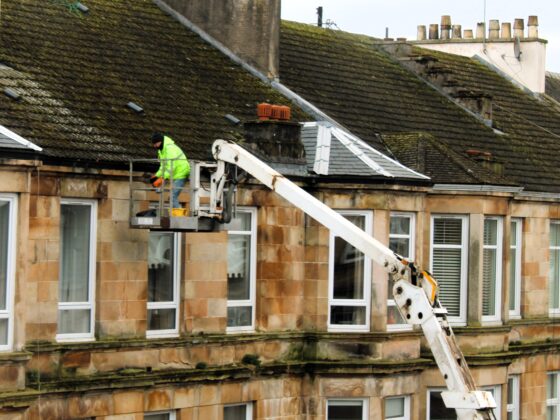
- moss will retain moisture and lead to a freeze/thawing process which shortens the length of life of the tile
- in high winds, concrete tiles can lift, particularly if they are not fully clipped – it was common practice on older tiled roofs to only clip tiles every third row
- cracked concrete tiles caused by workers walking on roofs – ensure that access to the roof is controlled
- cracks develop in the mortar used to fix ridge and hip tiles – these should be mechanically fixed with proprietary clips
- end ridge tiles are very vulnerable to movement and should be secured with a galvanised hip iron
- inadequate ventilation of the roof space (perhaps caused by a lack of counter-battening or attic ventilation) allows condensation and mould to develop on roof timbers
Repair and maintenance
It is worthwhile organising annual inspections of a tiled roof. Late autumn is a good time as inspections can be combined with cleaning of leaves and debris from hidden valleys and gutters. Minor repairs to damaged tiles can be carried out at the same time.
Moss can be removed from tiles by simply scraping it off with a wooden or plastic scraper. Jet power washing is not recommended. Once the moss is removed, tiles can be treated with a moss and lichen inhibitor. Copper flashings may also be used.
Individual broken and damaged tiles should be replaced with matching tiles. This may require use of reclaimed tiles.
 Defective concrete tiles
Replacing a tiled roof
If you must have scaffolding erected because of chimney or gutter work, consider replacing the tiles as well. This can be a difficult judgement to make as the present tiles may last a further 5 or even 10 years with proper maintenance.
As climate change has led to an increase of rainfall and high winds in Scotland, changes have been made to the laying and fixing of tiled roofs. It is recommended that each tile is clipped using aluminium tile clips, and every other row of tiles should be also nailed to the battens, as well as the tiles at ridges, eaves, valleys etc.
 Concrete tiled roof replacement. Note cross battening.
Roofing felt provides secondary protection in case a tile slips.
Counterbattens are laid up and down the roof, and battens are nailed across these. The counterbattens allow ventilation and prevent damp building up. Other roof ventilation may also be required. A breathable membrane underlay should be used. However, bituminous felts can also be used, provided there is sufficient ventilation to the attic spaces.
Replacing roof ridges
The ridge secures the slates or tiles, so repairs need to be undertaken quickly.
 Missing end ridge tile. Wet (mortar) fixed ridge tiles. Note roof anchor which should be safety checked every year.
 Dry ridge fixing. Ridge sits on plastic crad.
Other types of tiled roofs
 Pantile roof
Pantiles
Pantiles are made from clay and have been used on the east coast of Scotland since they were brought over from Holland in the 17th Century. They are S shaped and lock together like concrete tiles. They are fixed to timber battens which span across the rafters. Clay tiled ridges are also used and bedded in lime mortar.
Rosemary tiles
Rosemary tiles are plain clay tiles which were popular in the 1930s and still used today, They are fixed to timber battens, rather like pantiles; they have a small nib which hooks onto the batten and the tile is then nailed. As they are small they can be effective for small roofs above oriels. However, if moss builds up on them, older clay tiles can absorb moisture and be subject to frost attack.
Mono-pitch roofs (post war)
Roofs with a single sloping pitch became popular after the Second World War and are still used today. They are usually covered in concrete tiles, although can be finished in other materials. They have a special ridge tile which is used at the apex. Older mono-pitched roofs often suffered from condensation as there was poor ventilation of the attic spaces, unless additional wall vents were built into the high part of the wall that the roof was built up against.
Replacements for flat roofs
Most ex-Local Authority and Housing Association properties have been improved with insulated overcladding and original flat roofs converted to tiled pitch roofs. (Look for deep eaves under the gutter level).
Professional help recommended?
Although the work may appear straightforward, ensure your builder or tradespeople have the skills for the job. If in any doubt, get professional help to specify and organise the repair.
Who pays?
Roof repairs are normally a common responsibility.