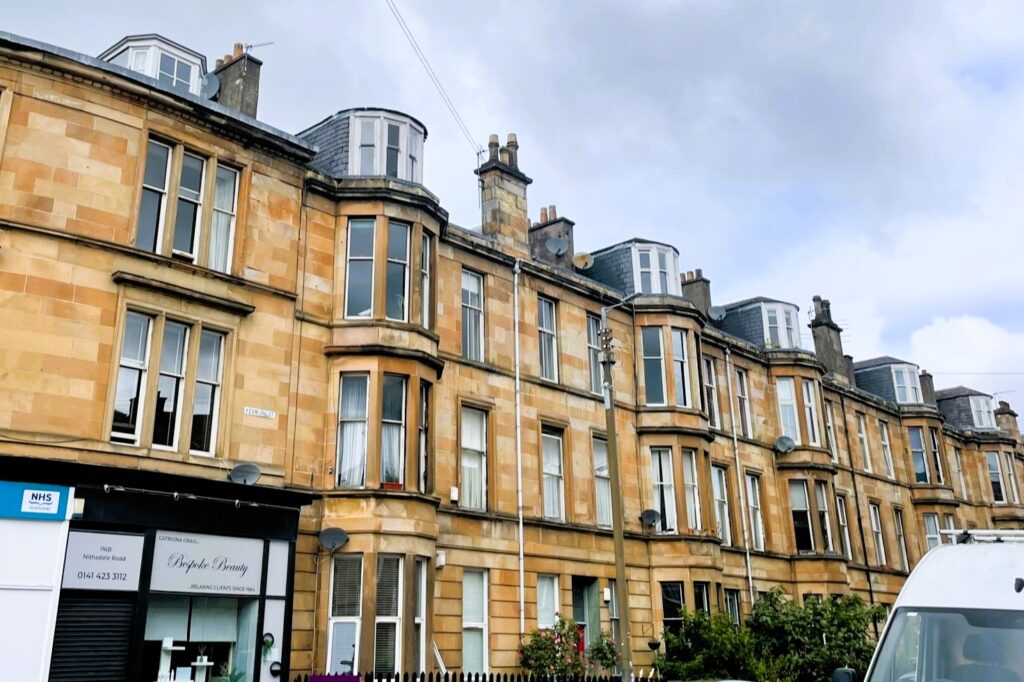
Organising repairs in tenement buildings can be challenging, especially if there are commercial premises in the same building as residential properties owned by landlords, owner-occupiers, housing associations, or local authorities. However, the process can be made easier by understanding the responsibilities of owners in tenement buildings and following proper procedures.
First point of call: titles
As always, the place to start is titles. Titles set out the rules for a building and can provide information on the common responsibility elements, how to reach decisions, and the rules when there are shops on the ground floor. It’s important to have this information to find out who is responsible for the different parts of a tenement building or the shares of repair costs.
If titles are silent on an issue or lacking information about something, owners should follow the guidance in the Tenements (Scotland) Act. For example, if a building requires a roof repair but the titles do not state who is responsible for the roof, the Tenements Act must be followed. Under the Act, the roof is a common responsibility, so all owners would need to share the cost of the roof repair. The sharing of repair costs also depends on whether it is stated in the titles and can vary depending on the type of tenure and size of the properties in the building.
Shops and commercial premises
Shops and commercial premises in tenements and blocks of flats need to follow the same rules as other types of owners. This means that if a common part of the building, such as the roof, needs repairing, shops on the ground floor are liable to pay their share, unless the titles say otherwise.
Many shops and commercial units are rented on full repairing and insuring leases. Even though the tenant is the one who pays for repairs, the owner is responsible for enforcing repairs. When carrying out common repairs, it is the owner who should be involved in the process, rather than the tenant, as they own the premises.
The titles may stipulate how to share repair costs in a tenement building. The most common ways to share costs are by equal shares, set percentages or fractions, Rateable Value, or floor area. Sometimes titles are unworkable; for example, the percentages stated might not add up. If this is the case, costs should be shared according to the Tenements (Scotland) Act.
A shop’s share of repair costs might be set by Rateable Value, which can mean that the shop’s tenant is required to pay a much larger share than the other owners in the building. This disparity in share of costs can stop repairs from going ahead. However, it is possible to come to a one off-agreement to make shares fairer and more workable. Titles can then be changed to make this arrangement more permanent if preferred.
As with any common repair, it is important to follow proper procedures, so that if anything goes wrong, legal action can be taken to remedy the situation if needed.
Read the full article on the Citylets website.