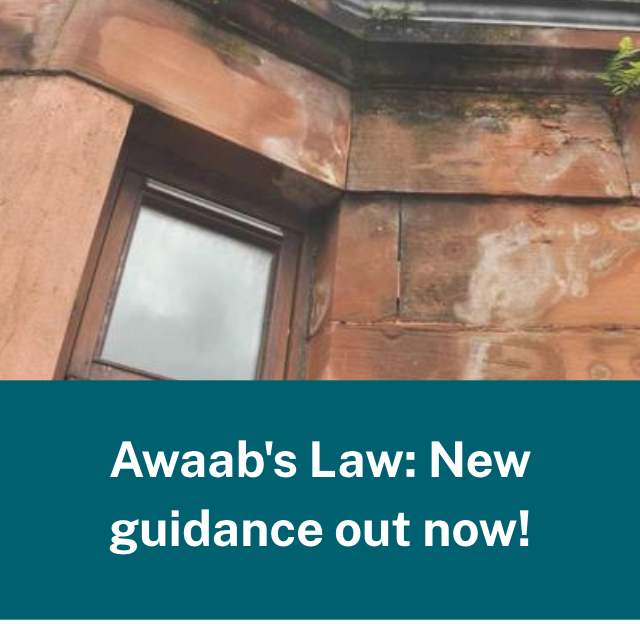
On 6th October 2026, Awaab’s Law will come into force in Scotland. The Scottish Government has published new guidance on what this will mean for landlords and tenants dealing with damp and mould.
On 6th October 2026, a new law will come into force in Scotland to tackle damp and mould in rented properties. Awaab’s Law, named after 2-year old Awaab Ishaak who died in Rochdale in 2020 because of mould exposure in his family’s rented property, will put in place timescales for both private and social landlords to deal with damp and mould complaints. Guidance for landlords on how to fulfil their new responsibilities was published by the Scottish Government in September 2026, ahead of the introduction of the Law.
As Awaab’s death demonstrated, damp and mould are serious problems. According to the 2024 Scottish Housing Conditions Survey, around 80,000 homes in Scotland have problems with severe damp and mould. Both problems are caused by excessive moisture, which damages the structure of buildings and harms the health of those who live in them. It is crucial that complaints of damp and mould are dealt with promptly, and that the root cause of the excessive moisture is tackled.
The new guidance states that private landlords must adhere to the following timescales for handling damp and mould in their rented properties:
- Within 10 working days of being made aware of damp and mould, they must ensure a competent person investigates the report.
- Within 3 working days of the end of the investigation, they must produce a written summary of the findings and give this either to their letting agent or directly to their tenant.
- Within 5 working days of the end of the investigation, if substantial damp and mould is found, the landlord must ensure that repair work begins.
The goal of any repair work should be to keep the property substantially free from damp and mould, so mould should not just be cleaned from surfaces as it will return if the root cause is not dealt with.
There are exceptional circumstances where the guidance acknowledges that these timescales might not be achieved, including:
- Delays in seeking planning permission or necessary approvals for repair work to start
- Unexpected contractor or supply chain barriers
- Severe weather or travel barriers
- Illness or bereavement on the part of either the landlord or the tenant.
However, the expectation is that landlords should do their best to make alternative arrangements to help them comply with their new duties.
Landlords who fail to comply with Awaab’s Law may be taken to the Housing and Property Chamber First-tier Tribunal, which can enforce repairs.
Click here to read the Awaab’s Law guidance for landlords
If you have a question about how the new law might affect you, use our Ask An Expert enquiry service