Repairs to drainage pipes are a common or mutual responsibility. Pipes only become the responsibility of Scottish Water once they connect to the main drainage system, normally on the edge of your property.
Drainage systems
You may have combined or separate systems for:
- foul water (known as ‘black water’ if from loos, and ‘grey water’ if from sinks, baths, washing machines etc.) is disposed of via soil pipes (also known as soil vent pipes or soil stacks).
- surface water is rain water disposed of via gutters and drainpipes from the roof, or via gullies from hard-surfaced landscaping and roads – water from gullies may run straight to the sewer or to soakaway from where it will slowly drain into the ground
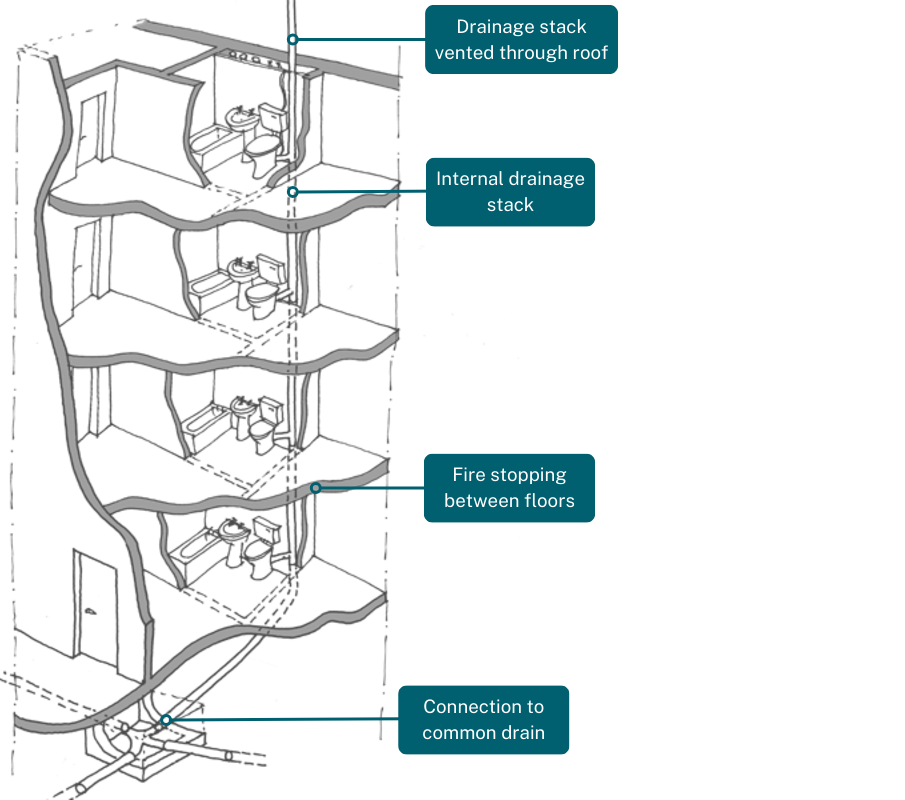
The pipes may be external or internal, running within a wall cavity or boxed in.
External soil pipes are vented well above the level of the top window and gutter. Internal soil pipes are vented through the roof and have a lead ‘slate piece’ and collar forming a flashing to the tiles or slates.
Internal pipes have a better visual appearance and are less likely to freeze but need firestopping. Cast iron pipes can be sealed at floor level with vermiculite. Plastic pipes need intumescent fire collars which will close up gaps if the pipe melts during a house fire.
If the soil pipes are at the rear of your building, they usually collect in a manhole in the back court. Usually, the drain then travels under the close to the front and connects to the public sewer. Drains sometimes run to a back lane or through a pend.
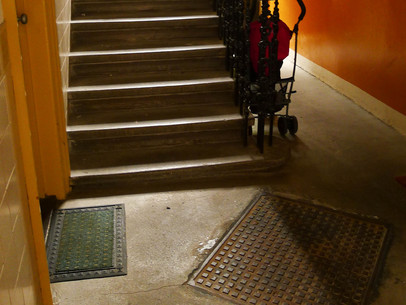 Drain cover in close. This indicates the line of drainage from the back to the front of the building. Probably added when internal bathrooms were installed.
Problems
External drainage systems
- leaks around rodding eyes and inspection chamber covers suggest a blockage downstream in the sewer
- persistent foul smells suggest a blockage or broken pipework allowing sewage to discharge to the surrounding area
- flooding or ponding could be due to a broken drainage pipe – it may also be that the surface water drainage system is inadequate and unable to cope
- slow draining water may be caused by a localised blockage of the waste pipe – recurrent blockages may indicate a break in the drainage pipes
- rats may be getting in via broken soil pipes or missing terminals on vents
- tree roots may block pipes
Internal drainage systems
- damp or musty odours near internal drainage fixtures may also indicate leakage
- noise or transfer of smoke between flats suggests a lack of fire stopping to internal pipes
- overflowing gutters could be due to blockages in the gutter or the downpipe, or defective design or installation.
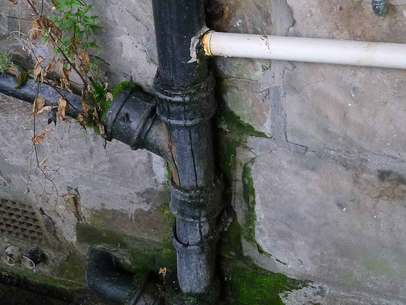 Damage to drainpipe. The drainpipe has been broken into to allow a sink drain (white pipe). The pipe now leaks as shown by the moss and damp. A proper connector section (like those below the white pipe) should have been used.
Solutions
Almost 80% of blockages are due to flushing anything other than human waste or toilet paper, or disposing of fats or oils down kitchen drains (which is an offence under the Sewerage (Scotland) Act 1968).
If the problem is underground and it is recurrent, then you may be advised to obtain a CCTV survey of the drains. This video camera survey should tell you if there are any cracks, poor joints, inadequate falls etc. that are in the drain, and where the faults are located.
In making repairs, be advised by a qualified plumber who may propose (in order of normal cost):
- high pressure jetting
- jointing – replacing the faulty section of pipe using appropriate coupling connectors
- renewal – excavating and installing new sections of drainage as required
Re-lining – installing a resin lining material to patch minor breaches – may also be proposed. Architects have mixed experience of the effectiveness of this type of repair but if it works, it will avoid the cost and disruption of excavating underground or internal pipes.
Professional help recommended?
Although the work may appear straightforward, ensure your builder or tradespeople have the skills for the job. If in any doubt, get professional help to specify and organise the repair.
Who pays?
Maintenance of the parts of the drainage system which serve the whole building is a common responsibility. If the part serves only some flats, then it may be mutual responsibility. Any branch serving only one flat is individual. But do check your title deeds which may say these are common repairs throughout. Persistent blockages caused by one owner may be considered damage.