
Some parts of the building are shared between some, but not all, owners. Typically, these are parts of the building that only some owners use. The owners that don’t have use of these parts, don’t have responsibility for their repair. These are generally called ‘mutual responsibility’ elements.
Note: This is not strictly the language used within the Tenements (Scotland) Act 2004, but for ease, repairs for which some, but not all, owners are responsible are conveniently called ‘mutual repairs’ within our articles.
The term ‘common repairs’ can be used for those repairs for which all owners are responsible. In contrast, mutual repairs are those which are shared between just some of the owners, normally those that have use of that part of the building, such as a common cupboard used by only two flat owners, or a lift where it serves only the upper (but not ground) floors of a tenement.
You must always check your title deeds to see whether they state whether parts of the building are ‘mutual responsibility’ elements. If your title deeds do not say anything, the position will be regulated by the Tenements (Scotland) Act 2004.
Items typically included as ‘mutual responsibility’ are:
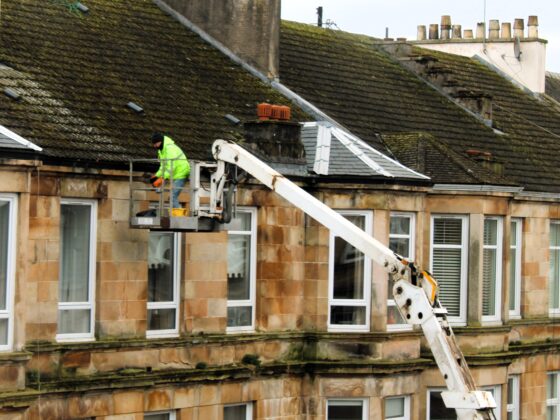
- chimneys and chimney heads – these are the responsibility of the flats that they serve
- drainpipes – which serve flats on one part of the building only
- close and stairs – where these do not provide access to all the flats or other premises in the building
- some buildings contain flats or shops which have their own entrance. e.g. main door flats
- some buildings may have shared cupboards or ‘stores’, perhaps one on each floor shared by the flats on each floor – these would be mutual to the owners on each floor
- owners of these parts of the building may not be responsible for maintaining the stairs and close entrance ways
- however, every flat in the building that has a door to the close or stair, even if it is not used, is normally responsible for stair and close repairs
Reaching decisions about mutual repairs
Decisions about the parts of the building that are mutual should be made using the same procedures that apply to common elements, except that the non-relevant flats (i.e. those who are not responsible for the costs) are not involved and do not have a right to vote.
Mutual repairs between adjoining buildings
If your building is attached to another, then the responsibility for some parts, typically gable walls and mutual chimneys, may be shared between the two buildings.
In practice, it’s likely that a majority of owners in one building and a majority of owners in the neighbouring building will need to agree and the costs will be shared between the two sets of owners. It is most likely that 50% of the total cost is shared per building, but then split between the various owners in each building in accordance with the title deeds (i.e. equally, by floor space, or Rateable Value etc.).