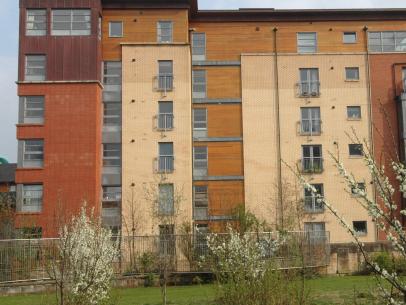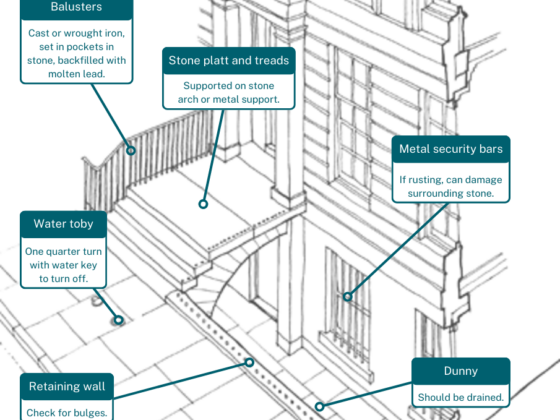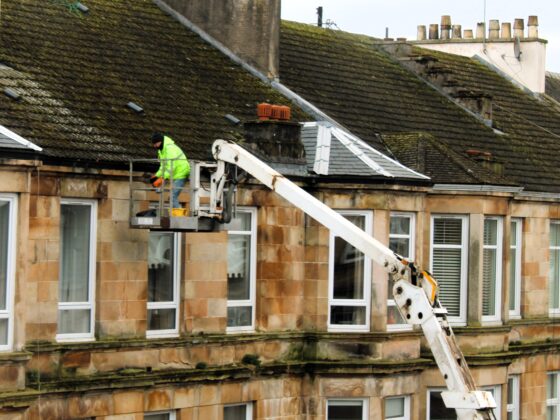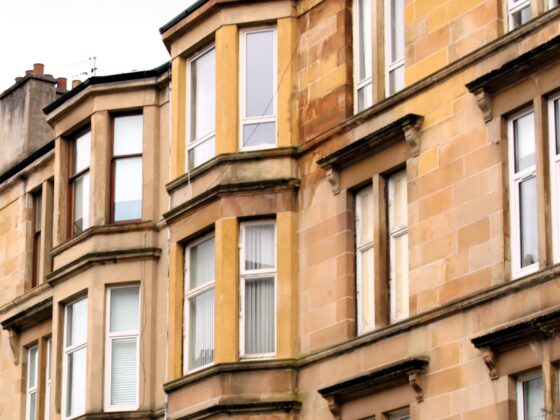

Common repairs refers to the parts of the building for which all owners as a group are responsible for maintaining.
Note: This is not strictly the language used with the Tenements (Scotland) Act 2004, but for ease repairs for which all owners are responsible are conveniently called ‘common repairs’ within our articles.
To find out exactly what applies in your building, you need to begin by looking at your title deeds. Where these do not provide an answer, the situation is regulated by the Tenements (Scotland) Act 2004.
What the Tenements Act says about common repairs
The default rules in the Tenements Act says that common repairs are for the parts of the tenement which it terms ‘scheme property’. These are:
(a) any part of the tenement which is owned in common, either under the title deeds or the Tenements Act (a typical example is the close and stairs),
(b) any part of the tenement which has to be maintained in common under the title deeds, and
(c) for most of the default rules the following parts of the tenement, even if they are not owned or maintained in common:
- the ground (solum) on which your building stands (but not the garden)
- the foundations
- the external walls
- the roof (including the rafters or other supporting structure)
- other structural parts of the building, such as beams, columns, and loadbearing walls
Legal reference
Reaching decisions about common repairs
Decisions about common repairs are usually made following the terms of the title deeds or, if the title deeds are silent or insufficient, by a majority of the owners concerned, following the terms of the default rules in the Tenements Act. Costs of common repairs are normally shared between all the owners. You must use proper procedures to arrange common repairs or your co-owners may be able to wriggle out of paying.
When does a wall stop being common responsibility?
You should check your title deeds to determine if the responsibility is common or not. The default rules in the Tenements Act says all owners are responsible for the repair of external and loadbearing walls.
If the wall in question is a gable wall between two different buildings, then the owners of the building on each side will normally pay half the cost of the repair, as the owners on each side of the wall are responsible for the wall up to the mid-point. These are called mutual repairs.
If the wall in question is partly an external wall and partly an internal wall, then the individual owner should take responsibility for the internal face, including the laths or timber frames that hold the plaster or plasterboard. The stonework that forms the loadbearing structure should be deemed as a common repair.