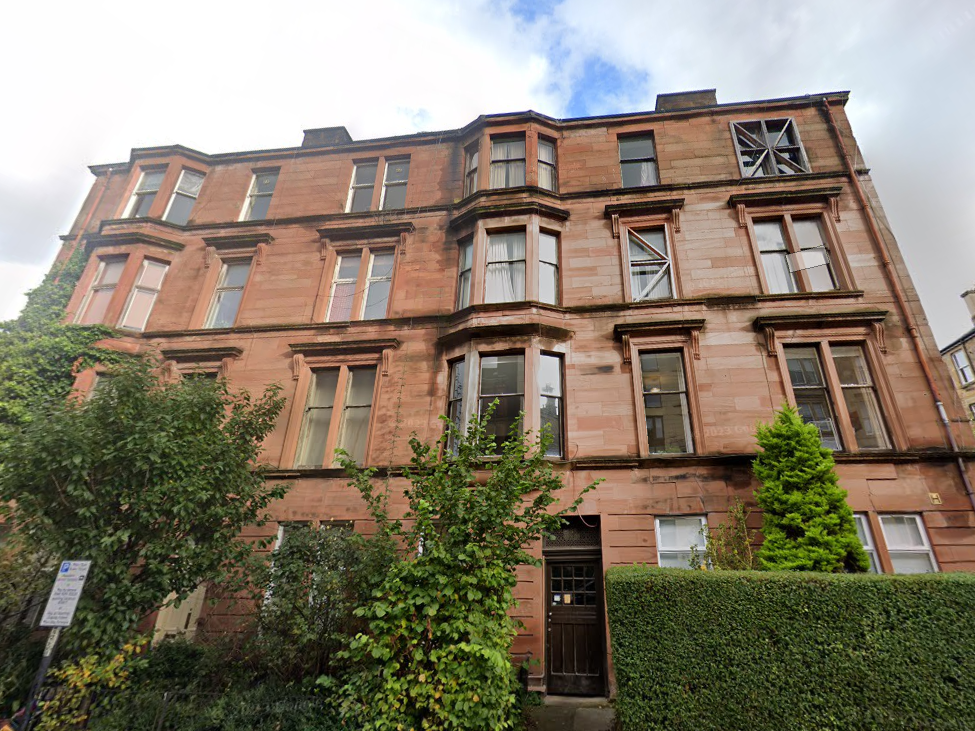
 The tenement was in a dire state, with braced top windows and water ingress.
Back in 2016, a tenement on West Prince’s Street, Glasgow was in a dire state. Glasgow City Council intervened with statutory action, removing a dangerous mullion and bracing a top window. A hazardous chimneyhead also had to be removed and daylight peered in through the stonework of the top floor flat, allowing water ingress. The building’s factor resigned years before due to ongoing high maintenance costs, and it had been left in a serious state of disrepair.
Fast forward to today and it’s a different picture. After years of hard work, coordination, and navigating the complexities of renovation, with a pandemic thrown into the mix, the project is nearing completion. But how did this happen? Under One Roof spoke with Kathleen Leitch, project officer for Glasgow City Council’s Neighbourhood, Regeneration, and Sustainability Private Sector Housing Team, and project lead, to learn how this historic tenement was brought back from the brink.
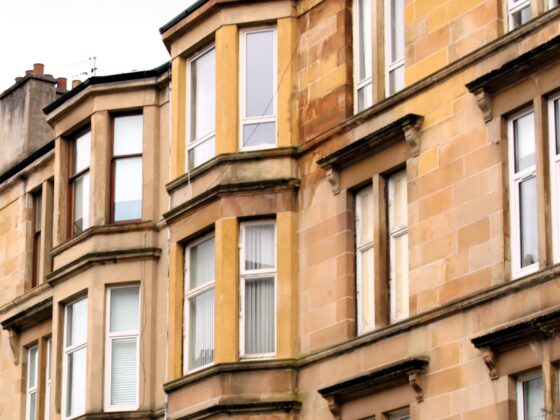
Nestled within the Woodlands Conservation Area, this tenement is a pre-1919 red sandstone building to the northwest of Glasgow City Centre. With one owner-occupier, three landlords of four flats, and three empty flats owned by one family, the building faced structural issues, stonework damage, pervasive dry rot, and extensive roof and chimney works.
A concerned landlord initiated the repairs process by privately appointing a surveyor and arranging a meeting with Kathleen to discuss the opportunity for a grant-funded major repairs scheme. As expected, the survey revealed that an immense amount of work was needed.
‘There was a huge amount of displacement at the front of the building, which meant that the stones were popping out in areas by as much as [one] to two inches.’
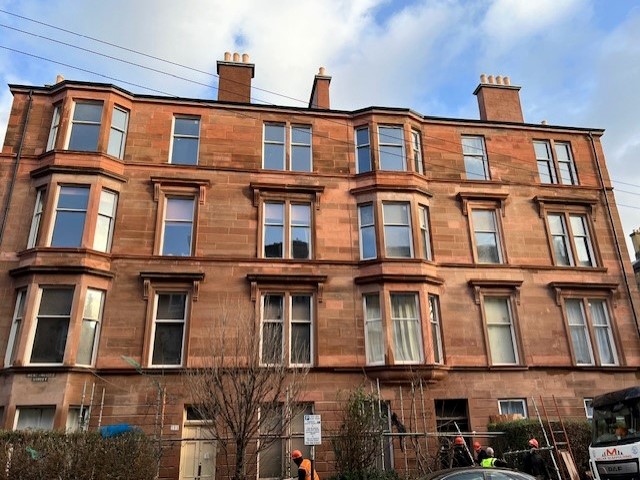 After many owners’ meetings, work finally began in January 2023.
At the first owners’ meeting, they were encouraged to submit a grant application to the Council to receive financial help towards the repairs. Such grant applications require unanimous agreement from owners. Persuading owners proved challenging and required extensive negotiations.
Even with the grant funding covering 50% of the repair costs, raising funds from the owners was also a significant obstacle. Not only were the cost of repairs high, but individual’s circumstances were varied. One owner whose flat had experienced water ingress for many years was unable to contribute their full share. They were persuaded to put in a smaller sum of money – then, Kathleen and the design team managed to gain agreement from three of the other owners to top up the shortfall in the project fund.
By the time all the money had been gathered in early November 2022, around six years had passed since the initial building survey and the resulting tender for the works was now five years old.
To cover the extra costs incurred by inflation, a percentage uplift had to be added to the tender of works. With the extra costs and unfavourable economic situation, the contractors and agents involved needed to trust in the surveyor’s word that the project was still achievable.
‘There’s a lot [in this project] about relationships between the contractors and the agents and the confidence they have in each other.’
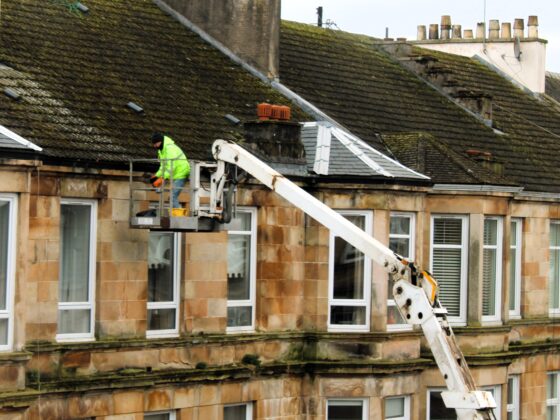
After many more owners’ meetings, work finally began in January 2023. Whole floors had to be taken out due to dry rot, 60 windows needed replacing, and invasive ivy growth needed removing. The ivy had grown through the wooden window frames, cracking a sash and case window and creeping down the walls and across the ceiling of one of the first floor flats. It appeared to be a Boston ivy which draws minerals out of stonework, leading to damage and decay. The coverage of the ivy also obscured daylight, preventing the stone’s natural wetting and drying cycles. With the stone saturated from overflowing gutters, it became more vulnerable to damage from frost.
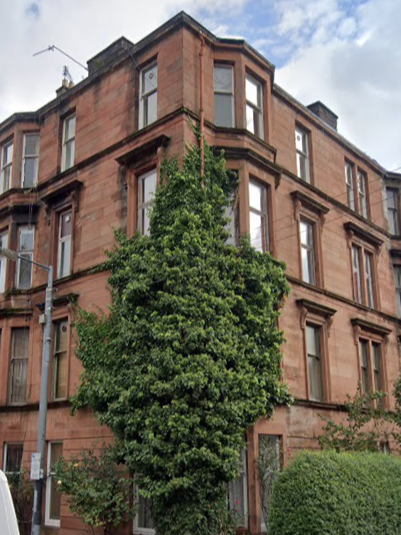
Invasive ivy growth had damaged a window and caused decay of the stonework.
Delays were rife, with the necessary clearing of the empty flats taking around four months. Finding a stonemason for the stonework repairs also took several months to organise. By Christmas 2023 the project was still not finished – a six-month contract had run into 14 months.
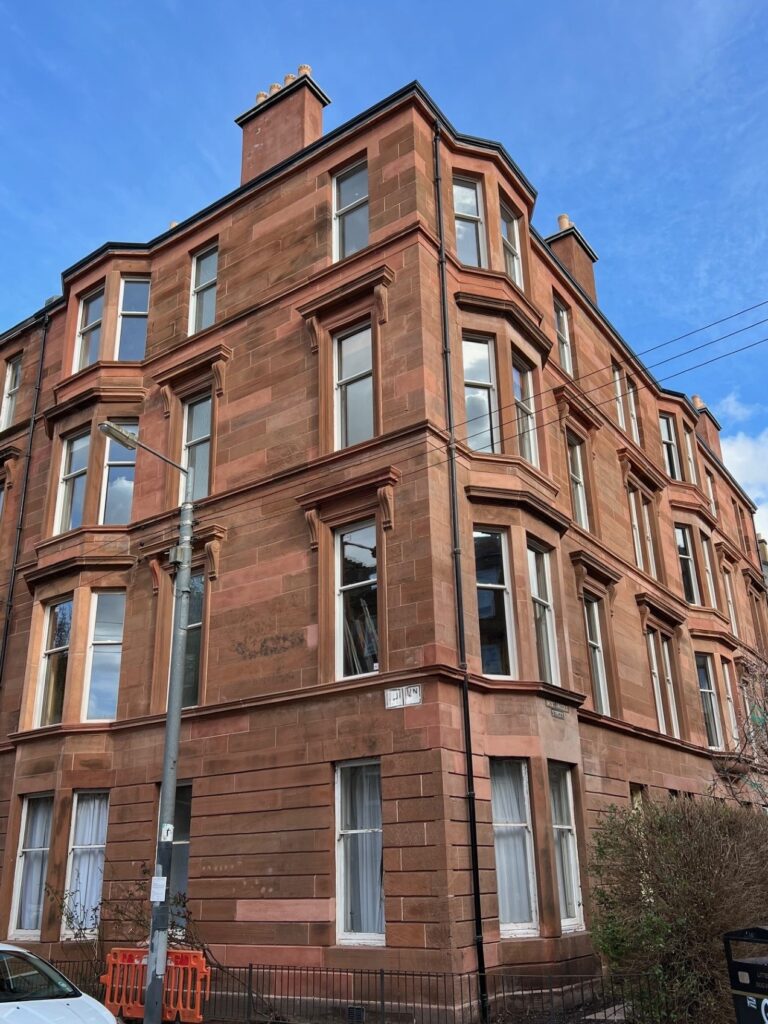
Despite the obstacles, the commitment to revitalising the property remained and the repairs are now nearing completion. This project highlights the complexities of the tenement repairs process, with absent owners, unforeseen delays, and financial difficulties. But it also serves as a testament to the transformative power of collaborative efforts in preserving Glasgow’s architectural heritage, ensuring that these historic buildings provide housing for generations to come.
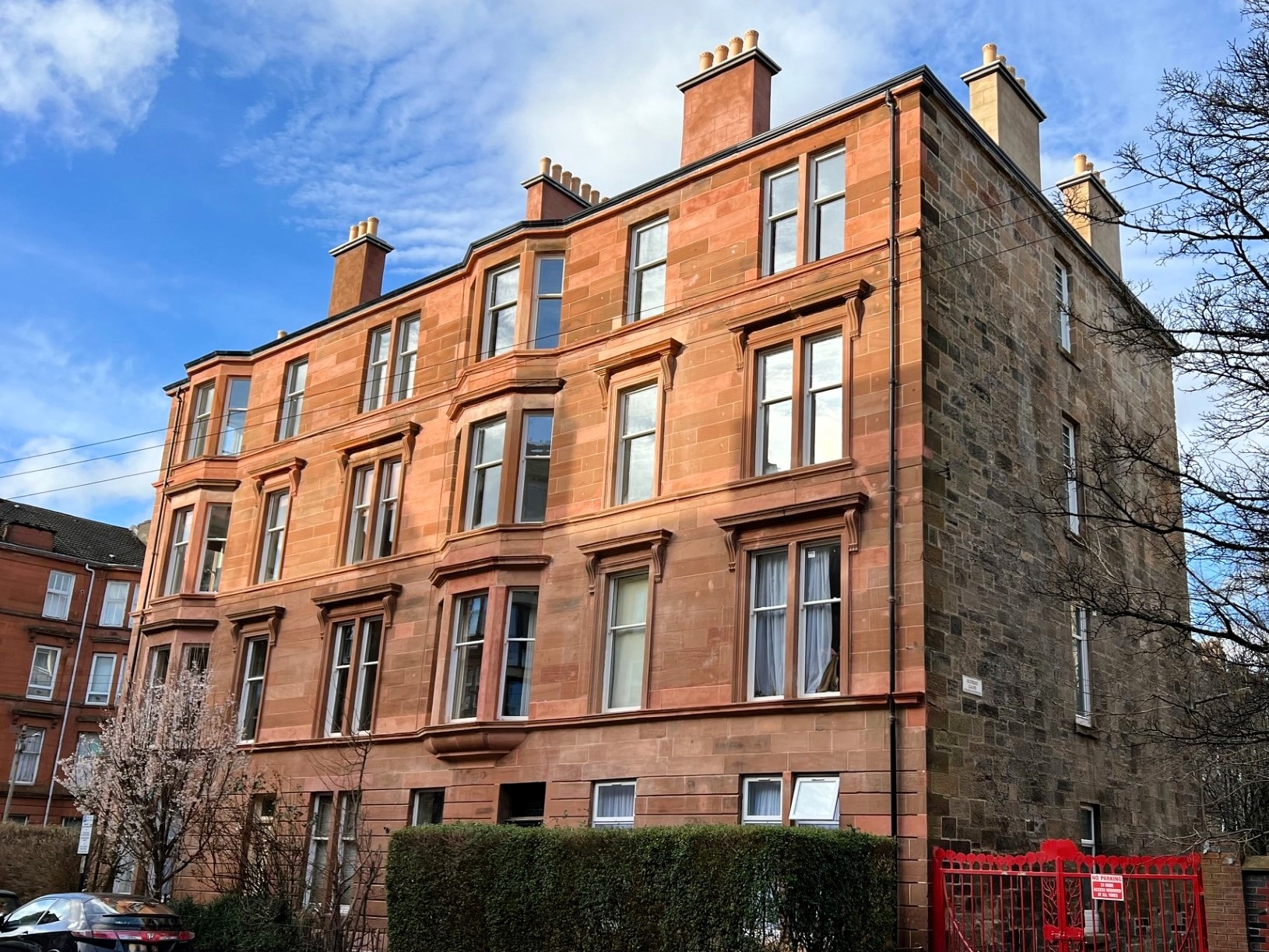 After years of hard work, the project is nearing completion.
If you would like to find out more about Glasgow City Council’s grants scheme, visit this page on their website.