Timber decay, through rot or wood-boring insect damage, can damage the structural strength of your building and be costly to deal with. Keeping timber dry and well-ventilated will not only prevent rot occurring, but may also be the cure for the problem if carried out properly. Chemical treatments can also be used and affected timbers may need to be replaced.
Rot is a fungus that develops in damp timber and will continue to grow and spread as long as the atmosphere around the timber stays moist. It often develops out of sight in lofts, solums and basements, under floors, or behind plaster, paint and varnishes.
The two most common kinds of rot are dry and wet (cellar) rot.
Dry rot
Dry rot requires slightly less moisture than wet rot to start off and leaves the decayed timber looking dry with a grid-like pattern of lines. Dry rot spreads through its ‘mycelium’ – branching white threads. Mycelium can travel over and through brick, stone, and plaster in its search for moisture and more damp timber.
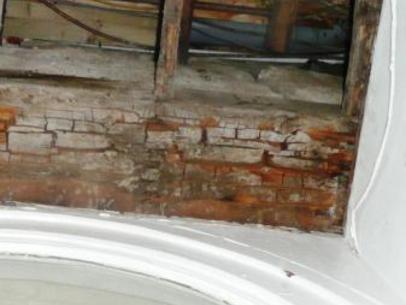 Dry rot. Note the typical grid-like pattern. Image courtesy of McGill Consultancy Ltd.
 A thick patch of dry rot mycelium. Image courtesy of McGill Consultancy Ltd.
Signs you might see:
- soft wood (test with a screwdriver)
- shrinkage of the timber
- mushroom-like smell
- fine, red dust on surface of timber
By the time the fruiting bodies (mushrooms) are visible, much damage will already have been done.
 Dry rot fruiting body. Image courtesy of McGill Consultancy Ltd.
Wet rot
Wet rot also starts in damp timber and, while it thrives in a damper atmosphere than dry rot, it is less likely to spread.
Signs you might notice are:
- spongy feeling wood
- discoloured wood
- ‘warping’ of timber
- paint lifting off the rotted timber
Treatment
While you are waiting to get the repair process underway, there is a lot you can do to halt the spread of rot:
- remove the source of dampness
- dry and ventilate the area – use a dehumidifier or leave the area open with floorboards lifted etc. – this may take some time
- brush affected timbers with fungicidal fluid (avoid aerosols and very fine sprays as these can waft toxic chemicals into the flat)
Finally, once you’ve got agreement, remove and replace affected timber. If your floor joist ends are rotten, they will need to be spliced with new timbers.
If you need a warranty for rot work, you will need to comply with the specifications set down by the company dealing with the rot, and this may entail taking out timbers that you consider to be perfectly sound and the use of chemical treatments.
Rot can also be treated by removing the conditions it needs to grow – humidity, temperature and moisture content must be maintained at the correct levels and these conditions must be monitored. There is no guarantee with this kind of treatment, but it does avoid the need to use noxious chemicals.
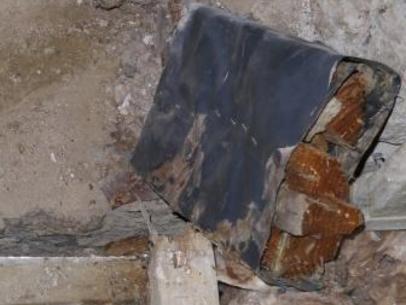 Dry rot in a beam replaced 3 years ago. Demonstrates the importance of dealing with the causes of damp. Even treated timbers will succumb to rot if they get wet enough. Image courtesy of McGill Consultancy Ltd.
Wood-boring insects
Woodworm (furniture beetle) is the most common insect problem in timber.
Like rot, these insects also like damp timber. Soft timbers, like pine planks cut from the outside of the tree trunk, are also vulnerable. Hardwood and Douglas fir are less susceptible to woodworm.
The small holes that are the classic sign of woodworm are actually the exit holes for the larvae that have been chewing through timber for up to 10 years. By the time you see the holes, much damage has already been done. You may also see timber dust.
Treatment for woodworm
Drying the timber will often halt the insect attack. Chemical treatments with a boron-based preservative are considered safe.
Who pays?
In cases where rot is affecting structural timbers, which are scheme property, the cost of treatment should be shared by all owners, determined by a majority decision.
If the rot stems from leaks in individual pipes or elements under individual responsibility, such as window cills, the owner responsible for the damage is generally liable, according to common law. However, proving a level of negligence, such as repeated leaks from the same source, may be necessary.
Duty to Maintain may apply in situations involving excessive rain penetration or when there is a threat to structural timbers.
Further information
- Historic Scotland Inform Guide ‘Rot in Timber’
- Historic Scotland Inform Guide ‘Insect Attack to Timber’
- Society for the Protection of Ancient Buildings ‘Timber-decaying fungi’
- Society for the Protection of Ancient Buildings ‘Wood-boring insects’
- Building Conservation ‘Dry Rot and its Treatment in Historic Buildings’