
Awaab’s Law is coming to Scotland. Landlords, find out how you can tackle damp and mould in your rented tenement property now.
Awaab’s Law
In 2020, two-year-old Awaab Ishak died due to prolonged exposure to mould. He had lived in a socially rented property in Rochdale, England, and his parents’ frequent requests to their local authority to tackle damp and mould in the property had been ignored. A new law named after Awaab came into force in England in October 2025, which placed strict timescales and new legal duties on social landlords to tackle damp and mould in their properties. A similar law is coming to Scotland, which will affect social and private landlords.
The Housing (Scotland) Act 2025 gives Scottish Government ministers new powers to introduce legislation on damp and mould. While the precise way they will use these powers is not yet known, we expect that any new laws in Scotland will be very similar to Awaab’s Law, and will place the following duties on landlords:
- A duty to investigate any complaints about damp and mould
- Strict timescales to resolve damp and mould by making repairs
Understanding Damp and Mould
Damp and mould are serious problems facing Scotland’s housing stock. Any type of property can be affected, and there are several different potential causes to consider. When tackling damp and mould, it is always important to investigate the root cause, rather than just cleaning the mould off or painting over it.
Damp and mould are both caused by excess moisture in a building. ‘Damp’ is caused when the excess water begins to damage the fabric of the building, affecting external or internal walls, timber beams or windows. Mould is a fungus which grows in these damp areas. As Awaab’s death demonstrates, exposure to mould can be very dangerous, and so damp and mould threaten both the fabric of Scotland’s buildings and our health.
Causes and Solutions for Damp and Mould
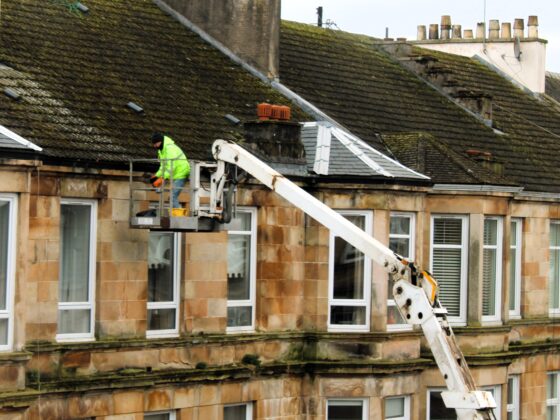
Excess moisture in a building can have many causes, each of which must be resolved in its own way. Rising damp can be caused when groundwater comes up through the foundation of a building, and can be resolved by ensuring that a damp proof course has been installed around the ground floor walls of the building, and repairing or replacing this as necessary. Damp can also be caused by overflowing or leaking gutters, which cause water to spill over onto external walls. You can prevent this by organising annual gutter cleaning, and checking your gutters for signs of leakage or overflow. Gutters, foundations and external walls are all usually ‘common’ areas of the building, so you will need to organise these works alongside your fellow owners and make sure that everyone is involved in the decision-making process and pays their share. You can find out more about the common repairs process here.
Windows are another part of the building frequently affected by damp and mould due to their exposure to the elements. We recommend painting windows every five years to prevent water from damaging the timber or metal surrounds, and checking the mastic sealant and repairing as necessary.
Damp and mould can also be caused by internal issues, such as poor ventilation, and sometimes by lifestyle habits such as drying clothes indoors. We recommend checking that windows and vents open and are free from debris. It’s also good to check that extractor fans work and are free from debris. You may need a contractor to confirm the fans are properly connected to a duct and vented externally. If your building has a garden, consider working with your neighbours to create a drying green on it, and enabling your tenants to dry their clothes outdoors.
There are many potential causes of damp and mould in tenement properties, but each comes with a solution. We urge landlords to act now, before Awaab’s Law comes into place, to ensure that your property is as free of damp and mould as possible.